
What is Yoga



What is Yoga?
By Jaanu
Yoga… what does the word make you think of? Perhaps it’s the fitness regimen that 1 out of 6 American adults say they engage with. Or is it the $200 billion global yoga industry? Maybe to you it’s a means to achieve well-being: mentally and physically. For the rare pandits of Sanskrit, yoga is synonymous with discipline and equanimity. The truth is that “yoga” is all of these things.
One of the earliest definitions of yoga is offered by Krishna, a Hindu deity, to the distraught warrior Arjuna in the Bhagavad Gita, widely considered to be one of India’s most eminent religious texts. “Be even-tempered in success and failure: for it is this evenness of temper which is meant by yoga.” It’s a nod to yoga’s omnipresence in the daily vernacular of that time, and also the reason why yoga is hard to define- it means so many different things, as Stuart Sarbacker acknowledges in his seminal book, Tracing the Path of Yoga. Yoga in the Gita meant “discipline.” This definition went hand-in-hand with the Hindu principle of dharma, or one’s moral duty.
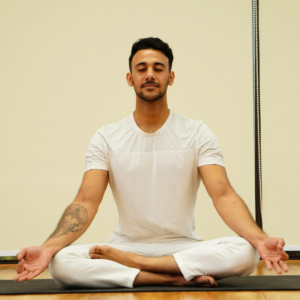 Yet, as Sarbacker notes, yoga has many, many other meanings. Yoga is also widely considered a means of “yoking” or establishing discipline between the mind and body. At the same time, it’s also pure contemplation, or the achievement of samadhi. The Indian sage Patanjali’s ashtanga yoga practice is a demanding 8-limbed practice which can lead to the cultivation of peace. These definitions of yoga are not wholly contradictory; rather, each definition seems to add a dimension to what yoga is.
But just when things start to make sense, we must consider the paradox of a renunciant’s path in yoga. It’s confusing; yoga is meant for renunciants in a way – it’s a means to let go of attachments in the physical sense. Sarbacker explains it thusly: “those who abandon the world are referred to with titles such as striver, renouncer, [and] virtuous one.” The “greater vow,” or mahavrata, is reserved for those who decide to give everything up to pursue yoga, while the “lesser vow” is reserved for laypeople.
On the other hand, mastery over yoga allows aspirants to achieve various accomplishments and powers that aren’t fathomable by the average person. Yoga grants siddhi and vibhuti, “that provide extraordinary capacities of knowledge 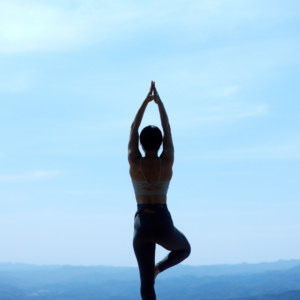 and agency” (19). So… to gain everything, one must renounce everything. Interesting.
As evidenced above, yoga didn’t always have a physical element to it. The practice is over 5,000 years old, and only in medieval India did the “yoga of force,” Hatha yoga, appear textually. Seated asanas, or postures, along with other physically demanding practices soon began to thrive. The complexity of these postures required immense skill, and a formal practice began to develop around these exercises and inversions. The pursuit of human excellence through such exercise, it was believed, led to the purification of the body, without the distraction of the mind or five senses. And the undeniable physical benefits of practicing yoga have ensured its firm grasp on the public consciousness, inside and outside of South Asia. 🪷