
A Profile of the Concrete Jungle



By Navin
On a family trip somewhere, perhaps Montreal or upstate New York, I decided to wax lyrical and say: “I like roads. I like how they turn.” There was a moment of confused silence as everyone turned to stare at me, before a round of raucous laughter ensued in response to that earnest declaration. Since then, it’s been a running joke in my family; my sister once gave me a sticker that now sits on my laptop proclaiming, “Some people call it magic – we call it civil engineering.” As a kid, I would sit by the roadside on a makeshift stool (usually a basketball or something similar) to observe the ant colonies hard at work. Each anthill, a few inches in height, was made up of thousands of grains of sand. Each grain in turn was carried from the depths of the earth by an ant. I think it’s fascinating to think about 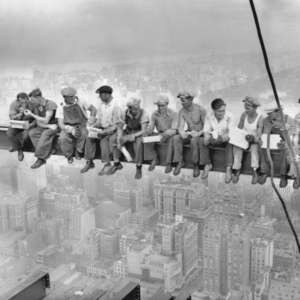 the same ideas in our world – how we construct our concrete jungles. I am honestly a bit proud that my family associates me with an appreciation for the public works, because I genuinely could spend hours contemplating the structures that fill our world.
No city provides a better environment to ponder these ponderings than New York City. Each pane of glass in each skyscraper, each meter of plumbing, each shingle of roofing – all were placed or fixed by some human being. It’s obvious, but amazing to think of in the context of the scale of NYC. The city has 1.08 million buildings, and all the building material together weights 1.68 trillion pounds. It was built by millions of people over 400 years and is now home to almost 9 million people and 65 million visitors annually. In history class at school, we learned about the rise of skyscrapers, and the immigrants who built them – a famous photo of this era “Lunch atop a Skyscraper (1932)” is a testament to the grit and courage of those workers.
During my stay in New York this summer, I have also become interested in the subway systems. 842 miles of track stretch in the dark and damp of the underground, often in many layers. Here, you see a cross section of Grand Central Station in 1906!! Today, the subways there go even deeper underground, beneath an ever-widening network of taller and bigger structures. This is truly a marvel of engineering, 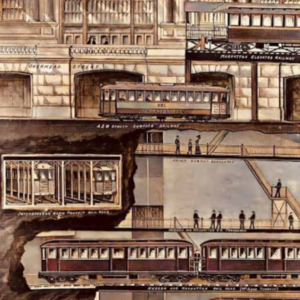 especially when you consider the fact that New York City is sinking at an average of 1 to 2 millimeters each year (due to compression from the sheer weight of metal and concrete on the bedrock).
As I rush to and from my summer program, rendezvous, and meals across the city, my eyes are often trained on street signs, walk signals, and the crowds around me. Yet taking a moment to look up, or down, at the civil works that surround us can be surprisingly therapeutic. The roads, bridges, tunnels, and skyscrapers that make New York function are so familiar to most of the residents here that they fade into the background, but they are the product of countless human hands and generations of effort. Perhaps that is why I still like roads, and how they turn: they are quiet reminders that even the largest and most complex things in our world are built one piece at a time. 🏗️