
The Basics Rules of Formula 1



By Jaanu
In June, I strove to answer a question which has boggled people around the world since the F1 movie starring Brad Pitt came out in the summer of 2025: what’s the appeal of F1? Starry title showdowns amidst the fireworks and marinas of Abu Dhabi make it seem like you need money, money, money, to watch or participate in the sport. But as that first article described, motorsport begins with people who don’t have an infinite bankroll to support these activities: mechanics and go-karters. Even Max Verstappen, whose father raced in F1 at one time, needed a financial backer to get started with racing.
The true appeal of the world of Formula 1 is not exorbitant wealth, but rather the scrappy competition of people who 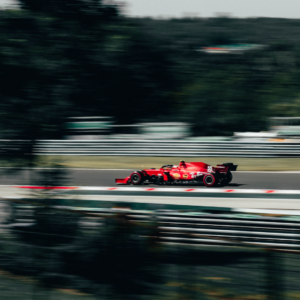 are the best in the world at what they do, and who can adapt to unpredictable challenges and keep fighting to come out on top.
Maybe I’ve now convinced you that appreciating the sport of F1 is not only an acceptable passtime, but also perhaps an interesting way to support the pursuit of engineering innovations for the most efficient speed the world has ever seen. For anyone new to watching the sport, this begs the question: what am I actually looking at, and what are the rules?
Let’s start with basics. Formula 1 is a team-based racing sport, where all cars entered into competition are built to meet specific regulations (the “formula”). Cars move extremely fast, reaching speeds greater than 230 miles per hour as they careen around tight corners and fight to overtake fellow drivers. It’s a dangerous sport because drivers have to make split-second decisions when they’re moving so fast. Sudden brakes and sharp turns also mean that drivers absorb enormous amounts of gravitational force, or g-force. When they take corners, brake, or accelerate in an F1 car, drivers take in large amounts of lateral g-forces which push them into the side of a car. That’s why it takes so much training to withstand the environment of an F1 car, which is physically exhausting.
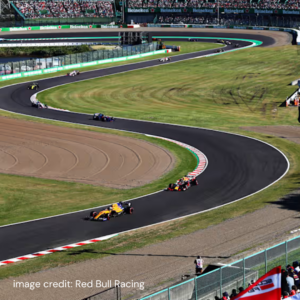 There are 22 F1 drivers representing 11 teams. Two major championships are up for grabs. The first is the Driver’s Championship, which one driver takes home. The second is the purview of the teams: one of the 11 teams can win the Constructor’s Championship. Drivers earn points based on their standings at F1 races. Each team has two drivers, and the team with the highest cumulative score at the end of the season takes home the constructor’s title. The winner of the Constructor’s Championship is not always the team of the Driver’s Championship!
The F1 calendar features 24 races, called grand prix, which take place all around the world. These events occur over the span of 24 different weekends which are divided into three types of races: three free practice sessions, qualifying, and the official grand prix race on Sunday. All races during a weekend happen at the same track. Free practice allows drivers to gain a grasp of the track, while qualifying races determine the starting lineup of drivers at the race event. The winner of the qualifying starts at the front of the pack during the grand prix itself, which is an advantage. The driver who is fastest in qualifying starts first; that driver takes “pole position” during the Sunday race. The ten fastest drivers who finish the race will earn points for themselves and their team. Having a good qualifying position is no guarantee for a successful grand prix. There are lots of factors that complicate how the weekend goes.
Weather is an important one. Drivers are all within a few tenths of a second of each other, so the performance of the cars are a huge part of the differentiator between the best and worst outcomes. Some drivers, however, are once-in-a-generation type of talent. Max Verstappen is known for his ability to make magic happen with a subpar car. Rain tends to be an equalizer of sorts during grand prix weekends, because wet tracks have much lower grip. Drivers have to focus on finding good grip on the track and the car’s innate horsepower is less important when weather is bad. Also, cars that are doing great can randomly fail, or drivers can crash (this also happens, even to legends like Verstappen).
Six of the 24 weekends are Sprint weekends. During a sprint weekend, two of the free practice sessions are replaced by a Sprint qualifying race and an official Sprint race – which is just a shorter grand prix. The winner of the Sprint race 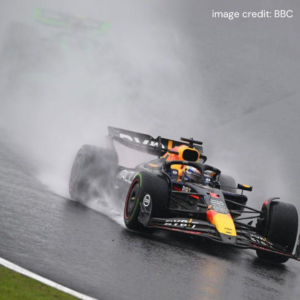 also earns some points for their team.
But the racing itself offers most of the fun. Drivers are never on their own. Each team optimizes a race strategy based on their car design. A race engineer is wired in to the driver at all times, and they’ll use real-time data to tell the driver to “push” (to go as fast as they can, to drive flat out), or to “box box” (to pull off the track to get their tires replaced). Pit crews are ready and waiting at the sidelines of the race to replace all four tires in as little as 2 seconds. Everything is overseen by the team’s principal, the central engineer.
F1 is an unpredictable sport, but that’s part of the thrill. In the next installment of this series, we will explore the sport’s storied history. 🏎️



Nicely presented