
Why watch Formula 1



Why watch Formula 1
By Jaanu
Formula 1: sometimes called the pinnacle of motorsport and a racing competition which is allegedly the world’s most prestigious. Hundreds of engineers work together to craft these single seater cars with powerful engines, which only 22 drivers in the world can race at speeds reaching over 200 miles per hour. This year, grand prix weekends will be held on five different continents.
Unlike other professional sports, success does not depend on the performance of the athlete alone. Formula 1 (abbreviated F1) is as much about engineering as it is about racing. A driver can have a great race, but struggle with engine problems and failures of car design, as Max Verstappen and Sergio Perez, then Red Bull drivers, did in Singapore in 2023. At the very next race in Suzuka, Japan, that year, the Red Bull car was dominant, and Verstappen could fight his way back to a triumphant win. 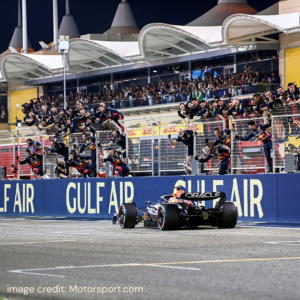 At other times, a perfect car is wasted when a driver makes a faulty decision or track circumstances including weather and dicey fights with other cars lead to a crash. In moments like these, the hundreds of hours and craftsmanship back at the team’s factory seem all for naught— but these low moments are superseded by the high moments, when the car and driver are in perfect harmony and the team can leap onto the pit walls lining the racetrack to celebrate as their racer brings the car home.
But what’s so special about the craft of motor racing? Most obvious might be the long legacy of fiercely loyal fans of the sport. Italy is a classic. Fans of F1’s Scuderia Ferrari are legion in Italy. The annual race at Autodromo Nazionale Monza draws crowds of fans, soaking the stands in red and charging the atmosphere with an electric energy that often permits the Ferrari drivers to deliver in completely unexpected ways. Ferrari fans, called the Tifosi, are known for their almost religious devotion to the prancing horse of the Scuderia. Waving massive banners and chanting their “Forza Ferrari” motto, Tifosi rally around the team win or lose and are generationally loyal. Italy is the heartland of F1 motorsport, 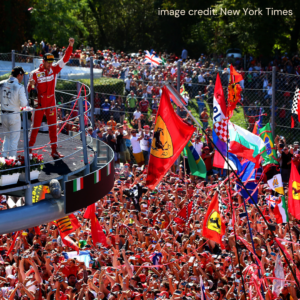 with many factories, karting tracks, and engineers based here. Formula Medicine, the medical team for F1 races, is also based in Italy. The charm of cheering for sports is incomparable. The experience of watching and rooting for your team, celebrating victories and commiserating loss with fellow fans, is something that draws you closer to community. It’s something to bond over, and the experience of watching historical triumphs with the energy of the Tifosi around you is surely unmatchable.
Tifosi aren’t the only diehard F1 fans. The Dutch fans paint the stands of Zandvoort at the Dutch Grand Prix a vivid orange in honor of Max Verstappen, setting off smoky orange flares and creating outrageous scenes of celebration whenever he pulls off another win.
Britishers are loyal to their Silver Arrows— the Mercedes team, with their factory in Milton Keynes, a most quintessentially British pocket of the UK. Cheering for teams in F1 is completely unpredictable. Race winners can hardly ever be predicted because weather and events like crashes and safety cars can entirely derail a race.
Beyond the experience of watching races as a fan is the enormous industry around Formula 1. Watching fans are often inspired to tackle the STEM challenge of engineering. Many members of Formula 1 teams are avid fans themselves. Whether they grew up watching races or grew to love Formula 1 because of the problem-solving and engineering 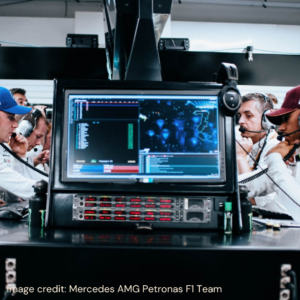 involved, the engineers and team principals are the backbone of operations at any race. It is undeniable that the hype around F1 draws more young people to careers in engineering and the sciences. Teams like McLaren have dedicated programs to encouraging girls to enter careers in motorsport, engineering, and technology.
As marketing around the sport increases, more students are encouraged to intern for teams in various capacities, opening doors to high-impact careers in data science, mechanical engineering, aerodynamics. As F1 drivers become celebrities, young fans online are wondering how they can get involved in the high-adrenaline world of optimizing these cars for such incredible speed. Creating interest in engineering is the first step to more countries with a young workforce passionate about problem-solving in STEM.
Many people wonder what the appeal of motorsport is all about, and these two reasons form the basis for me. There is room to grow for the F1 behemoth: room for more philanthropy and sustainability. However, it remains a storied sport— not just one of lavish excess. 🏎️