
Gratitude, A Serene Path to Peace



By Kay
I have been pondering many things lately. That is, I have been pondering whenever I get a few mins of alone time: like when I am driving, or during early mornings as soon as I wake up, or right after I get inside my blankets just before drifting off to sleep way past midnight…. No, no, no, this isn’t an essay about my non-stop busy schedule. This article is on a particular topic (which, surely, you’ve already guessed), that has been on my mind lately. I’m sharing it with our dear editor in the hopes of getting this published, so that this story can live on in the eternal world of online writing.
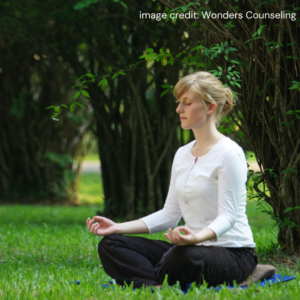 In the chaos of life, there is so much going on around us which tries to grab our attention. Just when you want to lock in and focus, just after you switch your phone onto “do not disturb”, you spot that little notification pop-up on your laptop. It comes with a teeny, tiny preview of text that immediately shifts your “locked-in” attitude to a wide-open world of thoughts. Isn’t it fascinating how quickly our minds can jump around and think of multiple things? We— that is to say, our minds— can travel so much faster than Hans Solo and Chewbacca’s light speed escapades. I have been looking around for something that will slow this all down. In essence, I’m seeking a converging lens.
Stumbling upon mindfulness, I gave it a try: reading books, watching YouTube videos, joining Brown’s Mindfulness Monday meetings (just 20 minutes, and you can give it a try if you’d like. Here is the link. Shoutout to Abe, who is one of the best teachers…), trying UCLA’s meditation app, podcasts, Spotify sessions, etc etc ad infinitum.
Some of these were very helpful, but just in the moment. I would immediately bounce back to the worldly chaos and noise. I wanted something else… something simpler that wouldn’t need a lot of time, yet which would give me peace and quiet, make me feel appreciative of what there is, pause, and think better.
Then, amidst the wealth of all that information out there, I found something which resonated. It was  gratitude: that gratefulness can actually help us pause and see things, which otherwise just go unnoticed. Not only did this catch my eye and ears, but also gave me a strange peace as I started to think about it. The more I think, the more it makes sense.
Growing up, we have been told stories of the Ramayana and Mahabharatha, the two great Indian epics. There is much evidence of the value of gratitude in these epics, which leave you with a sense of feeling grateful for what you have and being at peace with that. The Bhagavad Gita is the holy Hindu scripture that’s embedded within Mahabharatha. One of Lord Krishna’s most quoted verses from this text reads thus: karmanye vadhikaraste ma phaleshu kadachana. This says, in essence, that one has a right to his/her actions, but never to the fruit of his/her actions.
Fundamentally, it tells us to be thankful for our abilities to exist, act and contribute in this world, without being consumed with anxiety about the results. The results of our actions are outside of our control. It’s a simple idea: do your duty and be grateful for it, not worrying about results. Yet I’ve found it reduces the mental stress that which causes suffering in us. Krishna also teaches that a person of steady wisdom, the sthitaprajna, remains undisturbed in both joy and sorrow, neither yearning for what is absent nor denying what is present. This equanimity is deeply connected to gratitude: when we appreciate what we have, we are less shaken by what we lack.
In the Ramayana, Hanuman’s actions can be seen as a true example of surrender and joy in service, without the expectation of anything in return. This is also gratitude. Lord Rama’s acceptance and Krishna’s teachings show that peace is not found by acquiring more, but by relating differently to what is there already. Gratitude is a disciplined emphasis of our mind that helps us be resilient, humble and calm.
Modern psychology confirms this through ample research. Researchers have identified positive gratitude interventions on patients with cardiovascular disease. Harvard Medical School has published statistics in Frontiers journals on gratitude and its positive influence in students’ productivity and growth. Practicing gratitude is not new. We return to a wisdom long appreciated in human history: our minds need to be grateful to feel whole.
In his Yoga Sutra, the sage Patanjali cites, Samtoshad Anuttamah Sukha-Labhah: from deep contentment and a grateful mind arises unexcelled, supreme happiness and comfort.
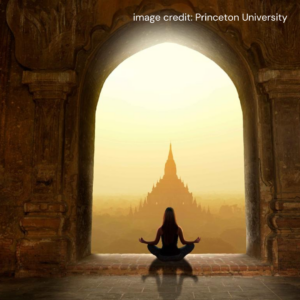 “If there is light in the soul,
There is beauty in the person,
If there is beauty in the person,
There will be harmony in the house,
If there is harmony in the house,
There will be order in the nation,
If there is order in the nation,
There will be peace in the world.”
Isn’t that comforting? 🙏