What makes philanthropists give back?



What makes philanthropists give back?
By Jaanu
Warren Buffett was once asked by an intern why he chooses to use so much of his wealth to improve society. Buffett’s reply, allegedly, was that he wished to see a world where anyone, born anywhere and handed any lot in life, had an equal shot at success. I heard this story from a former administrator of a federal agency, who was once that Berkshire Hathaway intern.
This anecdote remained with me vividly because philanthropy has an incredibly positive effect that ripples outward to continue touching others. Interns who see their mentors do incredible things are inspired to give back themselves. And they inspire others to give back too— and the cycle goes on. It may seem intuitive to give back in this way. Of course, you might say, it’s the right thing to do. But so many people don’t do this with their wealth. What makes “the givers” any different?
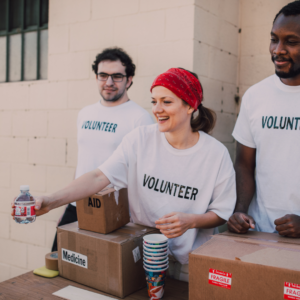 To start, one might wonder, where does wealth tend to go in the first place? The Bureau of Labor Statistics says that the richest Americans spend over four times as much on pets as the poorest Americans. The Wall Street Journal recently reported on Hamptons homeowners who paid for personal physicians— “concierge medicine”— who do everything from administering Botox to suturing wounds on site, for a price. More seriously, however, investments advisory firm Modern Wealth Management reports that wealthy individuals tend to invest and grow their money and often consider charitable giving in their plans to manage money. This can yield tax benefits. But if donating money to good causes is incentivized even for the most selfish or miserly of spenders, what makes big-time philanthropists decide to spend more on others than themselves?
Selfless philanthropists are humble. They are grateful for their wealth, not guilty about it, and don’t feel entitled to all of it, as Buffett noted in his letter pledging to give away most of his stock in Berkshire Hathway. As he put it: “Were we to use more than 1% of my claim checks on ourselves, neither our happiness nor our well-being would be enhanced. In contrast, that remaining 99% can have a huge effect on the health and welfare of others.”
This attitude is reflected also by Ruth Gottesman, a longtime professor at Albert Einstein Medical School in the Bronx, 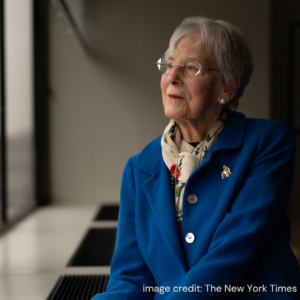 New York, whose donation of $1 billion in 2024 will ensure that all students earn their MD for free, in perpetuity. In an interview with the New York Times, Gottesman expressed gratitude for the opportunity to make such a positive difference. She refused to allow the school to change its name to her— “We’ve got the gosh darn name — we’ve got Albert Einstein”— and wanted to make the gift anonymously, though her friend, CEO of the medical system, wouldn’t hear of it. Such immense humility and dedication to the welfare of others is a rare and precious gift.
I think philanthropists who decide to give back, unreservedly, understand that common threads connect all of humanity. Wealth is an important descriptor of who we are— but when we strip away these adjectives, we’re all very similar. I think what Buffett and Gottesman realize is that, at the end of the day, what we take away from this life can’t be measured with numbers. 🙂