
Thinking About Laughter



By Navin
 I told a joke today in a group setting, and the room exploded in laughter. As one friend clapped, and another patted me on the back, I couldn’t help but observe the differences in how each person expressed amusement. The moment sparked curiosity: why do we laugh? And why does laughter make us feel the way we feel? I myself was delighted to elicit laughter. The sound itself is odd, a sort of purposeful coughing or barking. But laughter supersedes any language or culture barriers.
Researchers have seen laughter-like vocalization in animals, particularly in our primate cousins. Chimpanzees, bonobos, gorillas, and lemurs all produce similar panting sounds during play; this kind of communication could help encourage bonding and reduce tension. In humans too, laughter acts as a social glue, leading to one of its most interesting mechanisms: how easily it spreads! When we hear or see others laugh, specialized mirror neurons fire, and circuits in our brains involved in social understanding and emotional processing also fire. This helps people connect and creates a sense of belonging. In this way, laughter goes hand in hand with empathy – relating to the emotions of your peers is a huge factor in finding community. Often, the response is subconscious, and researchers have found that people laugh far more often during ordinary conversations than while listening to jokes. This comes across in our dialogue as friendliness, agreement, and shared understanding.
There are many types of laughs: belly laughs, giggles, cackles, chuckles, and guffaws. Isn’t it 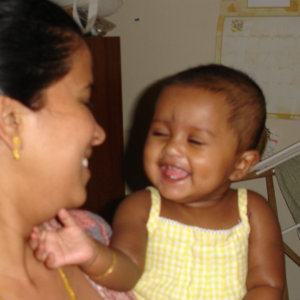 interesting how many words we have for laughter? I could go on some more! Chortles, snickers, titters…I’ll stop there but you get the point. People are often recognized by their laugh alone, and we all have unique timing, pitch, rhythm, and intensity. Some laughs are spontaneous and irrepressible (see Frodo Baggins’ laugh) while others are small and polite. It’s been shown that by hearing patterns in laughter, most people can determine when it is fake or genuine.
Speaking of irrepressible laughter, we all know that we sometimes laugh at very inappropriate or inopportune moments. It seems that this could be for a number of reasons. For one, the brain uses laughter as a sort of emotional regulator, and triggers it to bring our mood back to balance. It could also be that jarring shifts and incongruity between our expectations and reality can be reflexively mitigated of tension by a laugh. Or it could be that our instinct is to laugh to try to build social common ground when something isn’t quite right.
A few interesting facts about laughter as we close:
Babies begin laughing months before they learn to speak.
Most people can’t tickle themselves because the brain predicts the sensation, removing the element of surprise (try it now!).
Fake laughter or smiles can improve mood and turn into genuine laughter!!
Laughter is ingrained in all of us and is a large part of what makes us social creatures. Seeing the funny side to life connects us to other people, and that’s really a wonderful thing. 🌱