
Harry Potter Deserved Better



Harry Potter Deserved Better
By Jaanu
Please indulge my inner bookworm for a moment. You may take these musings with a grain of salt, and if you haven’t read J.K. Rowling’s Harry Potter franchise, you may encounter spoilers or may feel out of your element.
What is the purpose of a great fictional universe? The world of Harry Potter pushes readers to find magic in the mundane. A train station might feel like a portal to another world. The hoot of a night owl might be the salute of a hardworking mail carrier. Theme parks like Universal can strive to recreate these worlds because the books are detailed. Nuances, like the appearance of sweeping staircases in the castle where Harry goes to school or the weather during significant events like his 11th birthday, allow readers to imagine “what ifs.” What if such a world really existed? What if a young person was faced with overwhelming circumstances and worked hard to triumph over them?
This brings me to my central remark. We can learn much from how fictional characters navigate challenges and weather the good times, lessons which apply to our own lives. The Harry Potter books are lighthearted, but a little reflection reveals the magnitude of what the titular character had to accomplish.
It’s easy to be generous when things are going well. It’s also easy to be filled with pride when the world finally seems to see your worth. To be unassuming and selfless when things are hard is very different. Harry Potter at age 11 resembles Frances Hodgson Burnett’s Little Princess in his resilience and compassion. One could argue that young Harry had it alright; his aunt and uncle put up with quite a few escapades during his early years going away for school and took him back home each year. But it’s a hard thing to grow up feeling alone, and this Harry undoubtedly did.
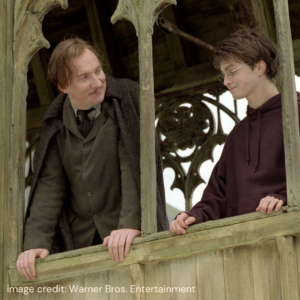 John Williams, whose music breathes life into the scenes it accompanies, captures the poignancy of Harry’s missing connection to his parents with the score “Window to the Past.” The truly engaged reader will listen to that truly exceptional composition when considering how Harry grew up. He can only glean the faintest impressions about his parents from their friends, who also pass away too soon. Despite his close friendships, Harry never experiences the affection and comfort of “home” unless he is at school. His life is full of adventures, but he never approaches his wealth with an attitude of entitlement. Nor does he develop a sense of self-preservation because he grew up with so little. In his first interaction with Ron Weasley, on the train to school, he insists on sharing food. What speaks volumes about such a character is his compassion. He treats people kindly and with respect, whether it be Dobby the house elf or eccentric classmates like Luna Lovegood. His respect and decency remain stalwart characteristics despite extraordinary and harrowing personal loss. He keeps trying to do the right thing, despite how uncomfortable it is, as evidenced by his stubborn insistence on getting Slughorn’s testimony in his sixth year of school. He shirks from the spotlight during the Triwizard Tournament in his fourth year; for someone who grew up without ever being pampered, fame might be especially tempting.
Is it nature or nurture? Why is Harry Potter the way he is? The plot may be a rollercoaster, but Harry Potter consistently proves that he deserves his many blessings. Wealth comes and goes, and the cards won’t always fall in our favor, but Harry shows that character is forever. 💫