
Why You Need to Watch The Hobbit Trilogy With Your Loved Ones



A friend came over last winter, and we thought we’d help pass the time until dinner by putting on a movie. We made 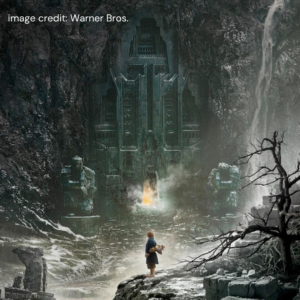 the fateful decision to play the first Hobbit movie. Our friend had never seen any of the Tolkien-inspired films before, and we assumed that it would be a fun and dramatic watch for a little while. It was surely too complex of a world for him to become interested in, without the necessary context.
We were very wrong. He spent the duration of the visit glued to the screen, devouring all three feature-length Hobbit movies. It was impossible to get him to stir from his cozy spot, and he ended up watching through the night. Memories of that visit pushed me to rewatch the films myself, and now I’m remembering what makes them so great. The creators of The Hobbit film trilogy recognized that they had a tall order to fill in following the Lord of the Rings trilogy, which had transformed the landscape of fantastical films in the 2000s.
Like Tolkien’s other work, these are adventurous and thrilling and follow battles against great odds and quests for glory. And, like his other works, they’re set apart from other mythic worlds because there is an emphasis on personal goodness. Bilbo, the main character, lives a quiet, peaceful existence, which gets shaken up when he is swept off into a crazy adventure to help the dwarves of the Lonely Mountain reclaim their homeland.
Bilbo is often portrayed as the hero, but it is not because he’s a bold and flamboyantly strong warrior. Rather, he continues to make selfless and caring decisions with the good of his team at heart. He’s not the leader of his little company of dwarves, but he is always willing to make sacrifices of his own comfort to do the right thing. I was deeply moved when he rushes to defend the dwarf leader, Thorin, during the beginning of their adventure. He is a hero 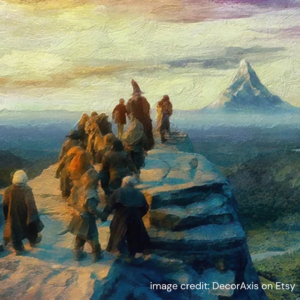 because he chooses to take a stand even when he is terrified. He continues to rely on his moral axis even when he stands to gain money for making a more selfish decision.
The wood elves of Mirkwood play a larger role in the film trilogy than they do in J.R.R. Tolkien’s original Hobbit novel. Initially, I was skeptical of the non-canonical characterization of the elves, but their message soon won me over. The captain of the guard is an elf named Tauriel. When the king of the Elves insists that they only need to defend their own borders, Tauriel pushes him to rethink their obligation to the other citizens of Middle Earth. She insists that they follow and destroy the evil orcs who continue to harm creatures outside of their territory. It’s an inspiring reminder that we need to take an active stance against darkness in our world. “Are we not part of this world?” she asks. To the viewers, it’s a challenge. Are we going to let evil be stronger than us?
The film is so strong because it has an incredible team of writers. Peter Jackson (also the director), Philippa Boyens, Fran Walsh, and Guillermo del Toro make sure that all conversations in the film are worthwhile. No character is a throwaway. Each person is there for a reason, and has a lesson to impart.
Another important interaction occurs between Bard and his son Bain. Bard is a bargeman, supporting the trade 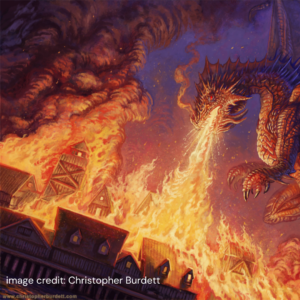 between the wood elves and the men of Laketown. He is an instigator, always refusing to accept injustice in the society around him. Because he is descended from the former lords of the city, he is a natural leader and is destined to become king of the men around the mountain. However, we meet him at a relatively low point: he lives in poverty and is being watched by the powerful men of the city, who do not want him to lead the revolution he is very capable of leading.
It becomes his responsibility to try to kill the dragon terrorizing the city. The importance of his son Bard is made clear when the duo is facing down the dragon. The dragon is storming towards them, and Bain turns his head in fear to look at it. Bard tells him gently to look forward at his father. Bain trusts him.
Trust is a major theme of the film. Thorin trusts Bilbo with his life. Loyalty runs deep with the dwarves. They would never disobey their king, but when Thorin goes temporarily mad and angrily orders Bilbo’s murder, they all refuse to do it. They are “loyal to a fault,” but they are also caring, and they know that Bilbo is innocent. We can stand to learn a lot from these movies. Good triumphs, but viewers are forced to understand that victory comes from a series of decisions. These people “value home above gold” and know what it means to be a true friend. 🏔️