
The Extraordinary Life of Louis Pasteur, and the Value of Reading a Translated Biography



The Extraordinary Life of Louis Pasteur, and the Value of Reading a Translated Biography
I had the good fortune, beginning early in life, to have excellent history teachers who knew how to reanimate “the clash of arms and the groans of the slain,” as R.K. Narayan put it once. History always felt alive for me; my mom’s stories and the efforts of my teachers, coupled with my love of reading 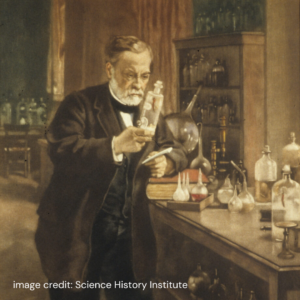 made it easy for me to imagine the great leaders of the past as real people. Love of country came before anything, especially before personal gain, for the freedom fighters of India and the founding leaders of the American Revolution.
It’s been a while since my last history class, but reading Louis Pasteur: A Biography, by Albert Keim, brought me the same feeling of reliving history. It was written in French and translated in 1914. My vocabulary in French allowed me to imagine what the original text might have sounded like, which added a depth to the English words. There’s a grandiosity to these words as well. This was a time, when people were way more respectful and eloquent even in everyday conversations. Pasteur’s contemporaries, both his friends and detractors, are incredibly famous scientists in their own rights, and it’s astonishing that these people were all colleagues: met at conferences, shared meals.
Joseph Lister, the great English surgeon and pathologist who pioneered antiseptic techniques in UK operating rooms, attended Pasteur’s grand 70th birthday celebration. He adapted Pasteur’s methodologies and the two researchers had a great deal of respect for each other’s work. Robert Koch was someone who occasionally disagreed vehemently with Pasteur. But both men studied causes of 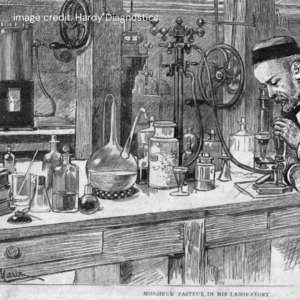 infectious disease and had a lot in common. There’s a humility even in disagreement. Disease was still so widely unchecked, and scientists were so rare still, that anyone in the field of medicine was, by nature, a civil servant. Their discoveries were affecting the entire nation.
Someone commends Pasteur for his decisions not to monetize the therapeutics he discovers. “In France,” Pasteur replies firmly, “a scientist would have demeaned himself if he did such a thing.” That focus upon the good of the nation before the self struck me as so like Ben Franklin and Bhagat Singh. It seems not like overly exuberant idealism to think that you want your life’s work to really be for the good of the communities around you, because that is what was expected.
I wonder if Jonas Salk, who was born in 1914 and who himself decided not to patent his vaccine for polio, read this book. The language is so crisp and academic that I am totally not surprised that everyone was so “smart” back then. If this was their daily light reading material, can you even imagine what the heavy lifting would have been like?!
Louis Pasteur didn’t start with much, and in fact, he was not a natural academic. He was deeply homesick during his first foray out to university. It got so bad that he ended up becoming physically ill and had to return to his hometown, Arbois, to recover. He didn’t leap to greatness because of a happy accident or a timely discovery. Rather, he was slow and methodical in the research he conducted. Whether it was studying anthrax, researching crystals, identifying bacterial sources of contamination, preventing rabies virus fatalities through the vaccine, or treating illnesses in silkworms, he had a million ideas which only worked after rigorous study and experimentation.
Research today expects outcomes. You can’t get funding if you don’t promise results of some kind, and, for trainees, flashy first-author papers are a non-negotiable for opportunities in the highest tiers of research institutes. AI has made it easier than ever to falsify results. I think the message which has gotten lost is that it takes hard work and reliable experiments to solve problems in science.
Pasteur was like that. Even when he was 99% sure that he had landed a solution, he would refuse to 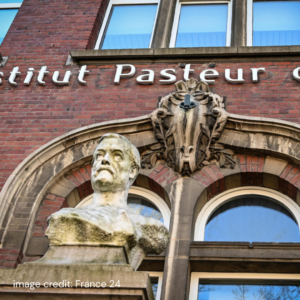 move on or publicize it without concrete proof. He was so nervous that the rabies vaccine would fail and hurt someone while simultaneously being so convinced that it wouldn’t – that he was willing to test the vaccine upon himself.
The name Pasteur today is synonymous with reliability and trustworthiness in science. He had the ability to imbue the same uprightness and work ethic in his trainees. He also acknowledged that hard work is never enough. Luck plays a role in acquiring fame. Nonetheless, Pasteur’s view was that satisfaction comes from efforts towards advancing the truth. “Whether life favors your efforts to a greater or less extent, one must have earned the right to say, ‘I have done what I could.’” This Albert Keim biography is a brilliant read, and I highly suggest this immersion in the French labs of the 19th century. 🔬