
Why Humanities Students Should Explore STEM


2026 seems to be a dark time for academics in the humanities. Artificial intelligence once seemed too far-fetched to affect anybody’s career, but the sudden launch of ChatGPT opened the gates of rapidly improving large language models, which can produce a truly shocking level of error-free writing. The death knell sounded by AI has resounded across the internet There is a number of practical and political reasons which are popularly cited as the drivers of these shifts, but the fact remains that fewer academic and teaching positions exist in disciplines like literature, arts, religion, history, and 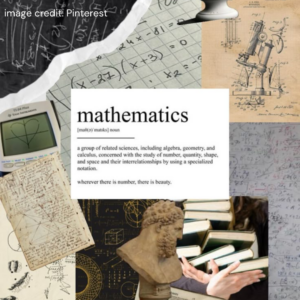 philosophy. Humanities departments across the country are experiencing loss of funding, which is clouding the viability of careers as humanities academics.
But the value of an education in the humanities is never going to decrease. Education is worthwhile because it is hard. There are no shortcuts to acquiring knowledge, whether it is in the humanities or in subjects like math and the natural sciences. To learn to communicate, produce art, understand world history, students need teachers. While it is frightening that humanities departments are increasingly viewed as unnecessary by some proponents of the funding cuts, I am optimistic about how things will improve. The value of education is inestimable, and we’ve come to know that in the years of human civilization. Universities are essential for society to thrive. The ability to share knowledge and learn from experts and peers is one of the most amazing parts of being human! However, the advent of AI does emphasize the importance of  humanities scholars understanding new fields. It’s like the advent of computers. Journalists and writers had to become comfortable and fluent with typing, and typing classes became an asset to aspiring writers. Skeptics intimidated by computers could still be successful, but those who learned to work with typing could use the skill to their advantage in the field.
I have a friend who is a computer scientist studying public health. In her years of public health research, she’s learned that her computer science skills are quite valuable, because not enough people in the public health space are comfortable with computers. It’s a huge asset to her studies and makes her unique in a field that also has a limited amount of funding.
But math, physics, chemistry, and biology should not just be written off as serious, boring subjects for those who are creative and tended to shrug off these classes in school. These are valuable opportunities to exercise logical thinking and black-and-white problem-solving. AI is eliminating the need for students to understand their homework, but these skills are just as important to preserve as the written ones.
Sal Khan reportedly began teaching his cousin math after school because she didn’t like the subject in middle school and was enrolled in a lower-level math class. Khan understood that one math class placement in middle school can transform a student’s attitude towards the subject for life, and wanted his cousin to see that math isn’t all that bad. It’s easy to think that a subject is not for you after one bad experience during school days. The experience of studying science or math can be very challenging, but students with the right support can find these subjects fun.
Here’s an example. I like writing and biology. Though physics is not my academic cup of tea, I do find some parts of it interesting. While common-and-garden classroom physics like electricity and magnetism never made me curious, I was fascinated by the story of the Event Horizon Team. Black Holes: The Edge of All We Know, the 2020 Netflix documentary, introduced me to the practical reality of being an astrophysicist. I could understand how math is applied to making discoveries about space, and the documentary — through a humanist’s eyes — made space appear in all its beauty.
Director Peter Galison is a philosopher and historian by training, but his documentary about the 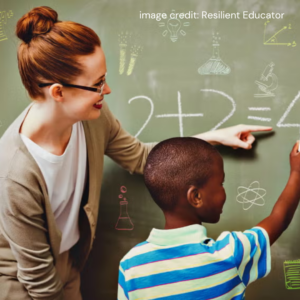 famous black hole image half the world has seen is extraordinary. It’s clear that his study of science has enhanced his filmmaking.
There’s even more evidence for why math is so important. In 2021, a team of experimental psychologists from Oxford and Loughborough identified that adolescents who don’t learn any math experience reduced inhibition in brain areas responsible for reasoning. The study of math is closely associated with neural plasticity. Math can be fun, and so can science. If you are a humanist who is scarred by days of trigonometry and chemistry or a poor teacher, perhaps you’ll be willing to check out a Khan Academy video or a lecture on MIT Open Courseware, just to keep your brain evolving.
While no one can be an expert at every field, we have the unique opportunity of life in a time where knowledge is the most accessible it’s ever been. It seems wrong not to make the most of it! 🧬