
Safety in the Water



By Jaanu
Public health. To me, the COVID-19 pandemic has made the words synonymous with infection prevention and contact tracing. In reality, public health workers implement education campaigns, develop necessary preventative measures, and engage in policy work, aiming to prevent people from getting sick in the first place. Public health workers can be nutritionists, social workers, epidemiologists, first responders, sanitarians, or even members of the citizenry who want to make a 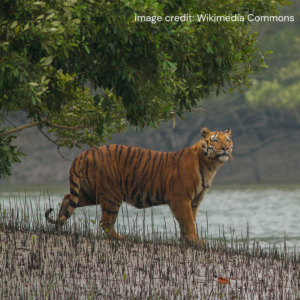 difference. One such concerted effort has made a huge difference in preventing drowning deaths in the world’s largest continuous mangrove forests: the Bengali and Indian Sundarbans.
The Sundarbans are a vast network of salt-tolerant mangrove trees, tidal pools, and estuaries which make up what UNESCO describes as “mind-boggling labyrinths of water channels.” It’s also home to many of India’s most iconic and now endangered animals, like the Bengal tiger, Ganges and Irrawaddy dolphins, crocodiles, sea eagles, and kingfishers, not to mention the flora in the region. More than 4 million people live across the Sundarbans and depend on natural resources from land and water here. Unfortunately, the ubiquity of waterways in the region mean that not all water access points are safe. Drowning has been a leading cause of child death in the Sundarbans for decades. Children aged 1-9 are at the greatest risk, particularly in areas like the Sundarbans: with broad swaths of unregulated waterways, weak healthcare infrastructure, and a lack of consistent supervision from community members. Public health researchers at the World Health Organization have developed a set of interventions, but it’s buy-in from local community members that is really making a difference.
The four interventions are simple and cost-effective. First is to install barriers controlling access to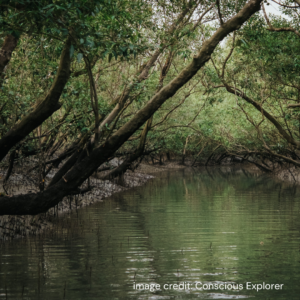 waterways close to inhabited areas. Secondly, and thirdly, children should be taught swimming and basic rescue skills, while adults should learn to conduct safe rescues and resuscitation. Finally, communities like these need designated safe areas for childcare.
It’s for this last intervention that mothers in the Sundarbans have mobilized. Mangala Pradhan is a Bengali resident in the Sundarbans who tragically lost her one-year-old to a pond right behind the family’s home. There are many ponds and rivers dotted throughout the region, and children exploring are often out of the sight and purview of their families who are preoccupied with tremendous amounts of daily chores for survival in the unforgiving and remote Sundarbans. Mangala and the community members of the region “have always co-existed with the water” and remained unaware of dangers until it was too late, according to interviews in a 2025 piece in the BBC.
But she and the mothers who have lost beloved ones to disaster have rallied around their mission of preventing any more drowning. About 12 of the mothers operate a local creche, or a communal day care, for more than 40 children, ensuring that someone has a watchful eye on the kids while families might have chores to do.
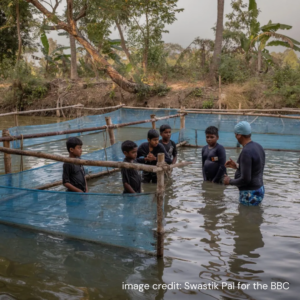 The community-centered approach is working. Neighbors spread the word about CPR classes, and many schoolchildren have been enrolled in swimming lessons, making walks to school along the waterways much safer.
It’s still a foreign concept to the Sundarbans. For decades, children have been allowed to wander freely. Parents often put jangling anklets on chubby toddlers so that they can be aware of (generally) where they are. Communities are also hesitant to fence ponds because of local superstitions that water deities will be angered. It’s taken the grief of families with children lost to preventable tragedies to shift the tide towards change. Public health is a special area because education and simple interventions like fences and swimming lessons can make a huge, huge difference. According to the BBC, nonprofit creches in the Bangladeshi Sundarbans have cut down drowning deaths in some areas by 88%. “Some areas” is the key phrase.
Opportunities like this one can use your help. No matter where you live, the resources of the internet have transformed what young people can do to tackle problems as distant as child drowning in the Sundarbans. If you find a problem like this that you want to address, find a Bengali nonprofit and reach out. I’ve found that many non-governmental organizations in places like this have English speaking staff eager for young volunteers. One could create flyers, or other educational media. Perhaps, during your college years, you could even receive a grant to travel to your chosen site for boots-on-the-ground work. Anyone can make a difference in public health, and it’s certainly up to us to try. 🐅