
Nipah Virus


By Jaanu and Vinaya
“One Health” is the “one love” equivalent of the global health world. Just as Bob Marley pushed for peace and togetherness with his groovy 1977 anthem, the one health framework asks scientists and policymakers to unite human, animal, and environmental health interests when preparing for future outbreaks of disease. The three are inseparable. Indeed, zoonotic spillover, or the spillover of animal diseases into human provinces, is what introduced Nipah virus to Bangladesh. Animal diseases can reach humans in a variety of ways: think dog bites conveying rabies virus, or tick bites giving humans Lyme diseases. Spillover are about as old as the dawn of time, but severity and frequency is influenced heavily by factors like geography and medical advancements. For example, rabies was an absolute death sentence before Louis Pasteur’s vaccine, and Lyme disease is much more common in New England than in other parts of America.
 What is Nipah virus? It was first discovered in 1998 but is still really devastating to South Asia. Case fatality is extremely high, estimated to be between 40% and 75%, according to the World Health Organization. Symptoms, quite similar to ordinary viruses, begin with a fever, and can include headache, confusion, and difficulty breathing. Clinicians diagnose Nipah using real time PCR tests, which amplify DNA and allow identification of the virus. It’s typically only considered in differentials in countries where the disease is actually endemic.
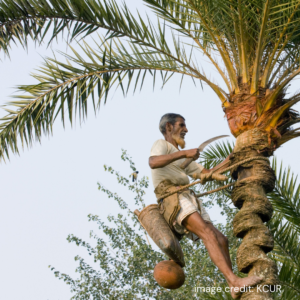
Nipah virus spillover began in a much more innocuous way that the bite of a mad dog: the shared bat-and-human food source of raw date palm sap. It’s long been a delicacy in Bangladesh and other South Asian countries. But exponential recent increases in both deforestation and urbanization have brought fruit bats into closer contact with humans. Genetic studies have shown that Nipah virus was not seen evolving within the human host, which suggests limited human to human transmission, compared to a zoonotic source of disease.
Hardworking Bengali harvesters would climb trees and insert spouts to tap date palms for sap, which is 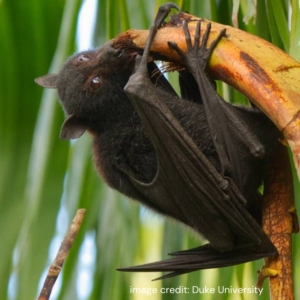 typically collected in a pot, hanging high off the ground where the sap is collected. But during the humid jungle nights, while humans sleep, fruit bats were recorded drinking the same sap of the date palm and even (gasp!) urinating into the pots. It’s gross but unavoidable when large forests continue to shrink and more species become our unwilling neighbors. But even if we replant the forests we’ve cut down, it will take years to undo the damage. So, what can we do?
Establishing surveillance within communities in regions with higher bat populations, especially those with seasonal stressors and deforestation, can help detect the virus early on to prevent spillover. In addition, advances in metagenomics to identify potential zoonotic microorganisms and predict their virulence is going to be helpful. More research is needed to identify a cure. Stopping a spillover at its origin is the key to prevent future outbreaks. Protecting the environment with better land and agricultural planning will best reduce bat and human contact. 🦇