Stewardship or Dominion


Stewardship or Dominion
By Navin
What is the true significance of endangered species? If a species, say a certain type of penguin, goes extinct on a remote island in the Antarctic, does it affect any of us? If a tree falls in the woods and nobody hears or sees it, does it really fall?
From a utilitarian perspective, one could start by asking what tangible consequences the extinction of a species has for human welfare. Within this framework, the value of a species might be measured by its utility, or its contribution to 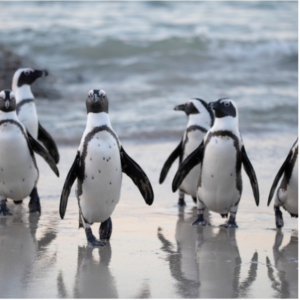 human survival, health, or happiness. Many species provide direct benefits: plants or animals that yield food or medicine (i.e. Gila monster hormones and Ozempic), insects that pollinate crops, and predators that keep ecosystems balanced. Losing such species can have cascading effects that eventually harm humans.
However, this reasoning has limits. What about species that seem to serve no apparent purpose for people, like that hypothetical penguin species in Antarctica? Even from a utilitarian standpoint, their extinction may still matter, albeit in indirect ways. The loss of one species can disrupt complex ecological webs, leading to unpredictable consequences. Moreover, biodiversity itself has intrinsic value as a kind of “insurance policy” against environmental collapse. A diverse biosphere is more resilient, offering greater adaptability to climate change and disease. In this sense, even a seemingly insignificant species plays a small but key role in maintaining the stability of the systems upon which all life depends, including our own. This aligns with core beliefs in planetary health.
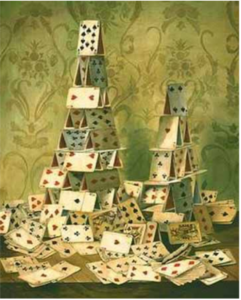
Moving beyond utilitarianism, we can also consider a philosophical argument about placing humanity at the center of  moral consideration. An image that has always stuck with me is an example from my high school Biology and Environmental Science teacher; life occurring on Earth is less likely than chucking an entire deck of cards in the air and seeing them land in a perfect card house. Every living being is a unique outcome of billions of years of evolution, a story of survival, adaptation, and interconnection. When a species vanishes, an entire evolutionary narrative ends. The extinction of that penguin represents a certain conclusion. Once the penguins are gone, we can never bring them back. They are lost to time, just like the Dodo birds (whose extinction still hangs heavy on our conscience!). Religious perspectives add another layer of meaning to this question, particularly through the contrast between dominion and stewardship. In many Judeo-Christian interpretations, Genesis describes humanity as having “dominion” over the earth and its creatures. Historically, this concept was
  sometimes understood to justify human control or the priority of human needs over others.
 Yet, in my Catholic middle school, we learned to reframe dominion as stewardship: a sacred responsibility to care for creation. In this view, the earth and all its life forms are not human possessions but under our care. Humanity’s role is not to dominate but to protect, cultivate, and sustain the other life forms on our planet. The extinction of a species, then, represents not only an ecological loss but also a moral and spiritual failure.
Last night, returning to my dorm, I walked past a small rabbit nibbling on an apple. I had a brief one-sided conversation with it, and continued on my way, but small moments of such companionship make one ponder. To date, we don’t have definitive proof that there are other forms of life anywhere in the universe— so for all we know, we could the only creatures alive, floating through space on tiny rock.
 In my opinion, when this could be the case, it’s best to preserve our friends on the planet as best we can; it’s a less lonely way to live! 🐧