Ethical Journalism


“It’s clear that as a journalist you have power — the power to speak to the people. But with that power also comes responsibility.”
– A Practical Handbook for Working Journalists in India, BBC
The journalist plays an important role in society. The responsibility to convey news and communicate truth to people is not a light one. It’s always been the job of the journalist to navigate real world challenges to give an honest picture to the people. It certainly isn’t easy. As the Practical Handbook for Working Journalists in India puts it, “journalists are often caught between extremes in society.” Opinions can 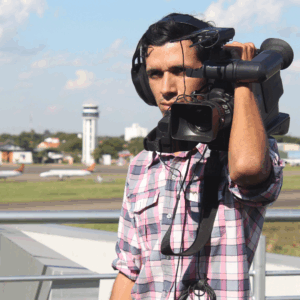 bleed through testimony and it’s our job to pick apart interviews to give the truth. Some journalists need to navigate threats to physical safety in the course of their reporting. But physical danger isn’t the only challenge a journalist can face; journalists “may find themselves pressurized to report from just one side of the story — to present an unbalanced picture of events to their audience.” It can be an isolating job. You might have to get used to people being mad at you. The only thing you can’t compromise is your code of ethics on the job. People read the news because they feel they can trust it.
The Handbook offers examples of challenging reporting circumstances. In the Kashmir Valley, in northern India, some journalists have felt pressure from the many sides that have a stake in the border dispute. Reporters in Sri Lanka got one perspective from the government and one from the LTTE. As long as journalists have had a job, they’ve had disputes with sources and readers. It’s part and parcel of the work, and the good journalist will abide by ethical practice before anything else.
As a reporter for my college newspaper, I’ve learned that a critical part of ethical journalism is transparency. It can be easy to want a particular statement that will make the story fit the image you’re building in your mind. But you can never anticipate what your sources will tell you. Doing so might make you prone to slanting the story in a particular direction. Many times, I conduct interviews  expecting to hear one thing, but change my story entirely because of the facts my sources give me. Your biases should never reach the story, and being conscious of them can make you a better reporter.
Facts and opinions should never mix. In our school paper, no reporter covering news can also write opinions. We don’t want opinions to influence the news we put out, striving instead to be a nonpartisan source for information.
We’re all prone to making mistakes. Journalists should always report the truth, so if you find out there’s a mistake in your story, don’t hesitate to correct it.
I think, today, it’s especially important to remember this last universal journalistic truth. Journalists should never allow their personal interests to interfere with their job. If your personal interests and beliefs dictate how you do your job, you aren’t an impartial journalist- you’re an activist. We need activists too! But we need distinctions between journalism- where people get unbiased news- and activism- where people are trying to change or influence your thought.
In June, news broke that Lauren Windsor, a self-described “advocacy journalist” – approached Supreme Court Justices Samuel Alito and John Roberts, behaving, inauthentically, in a way to suggest that she was a religious conservative. She asked questions and made comments that suggested a more Republican point of view, and recorded audio secretly of the justices reacting and responding to her. The New York Times wrote that Windsor gets statements thanks to her knack for “disarming her targets with words of sympathetic conservatism.”
I believe this deliberate misleading of her sources doesn’t make her an investigative reporter. These tactics don’t align with ethical standards for journalism and are unfair means of gleaning information. Lying about one’s views and recording audio or video without a source’s permission are not common practice in journalism, because most people agree that this isn’t acceptable.
Even at the college level, we must prep our sources and be honest about what 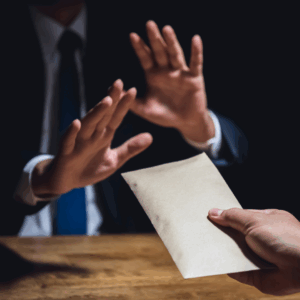 we’re using the interview for. I couldn’t lie about why I was interviewing someone and use that interview in an article, just as I couldn’t accept a bribe for writing an article and pushing it in a particular way. Journalism is changing. In another article, we’ll explore other ethical concerns!